From Field to Lab and Back: The Power of Participatory Development in Kenya’s Lake Basin
In the field of international development, a persistent gap often exists between academic innovation and actual community adoption. Brilliant scientific breakthroughs frequently gather dust in university archives, while well-intentioned grassroots projects can stall due to a lack of rigorous, evidence-based design.
In western Kenya, Aid the Needy Kenya (ATN-K) is systematically dismantling this barrier. Through its newly established, multi-sectoral alliance with Jaramogi Oginga Odinga University of Science and Technology (JOOUST), this fifteen-year-old organization is proving that the most sustainable way to fight regional poverty, inequality, and climate vulnerability is through a model of radical collaboration.
Flip the Paradigm: Communities as Co-Creators
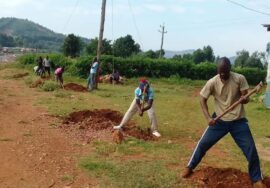
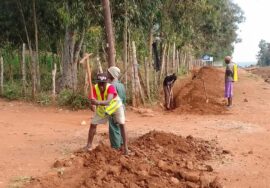
At the heart of ATN-K’s approach is a strict departure from traditional, top-down charity models. Instead of treating local populations as passive beneficiaries of external aid, ATN-K utilizes participatory methodologies that place community members in the driver’s seat of their own economic and social transformation.
By securing deep structural trust across the Lake Victoria Basin Counties, ATN-K has built an expansive implementation network. This network is now serving as a massive, real-world laboratory for JOOUST’s flagship VLIR-OUS project. Together, the two institutions are co-creating, field-testing, and scaling solutions where academic precision meets everyday human survival.
Deep-Dive: A Multi-Sectoral Blueprint for Resilience
Because poverty is cyclical and interconnected, ATN-K simultaneously addresses multiple facets of rural livelihoods. Their current collaborative initiatives span four critical pillars:
1. Climate-Smart Agriculture & The Blue Economy
Smallholder farmers and fishing communities along the lake face compounding environmental threats, from climate variability to collapsing fish stocks.
-
The Interventions: Backed by the US Embassy in Kenya, ATN-K equipped vulnerable women’s groups in Karabondi with solar irrigation kits to establish year-round agronomy lines independent of rain patterns. Concurrently, they are setting up cold storage preservation facilities across seven distinct beaches to radically curb post-harvest losses for local fishers.
-
The Research Integration: These programs offer JOOUST scientists a living venue to deploy, evaluate, and refine climate-resilient crop varieties and sustainable irrigation technologies.
2. Infrastructure-Led WASH & Resource Management
Water, Sanitation, and Hygiene (WASH) programs cannot endure without proper local governance and structural protection.
-
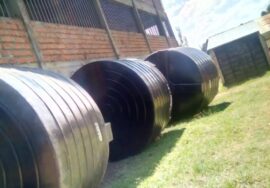
The Interventions: Working alongside Water Mission, ATN-K constructed a massive solar-driven borehole infrastructure project in Atela, providing clean water to over 5,090 individuals and linking local primary and secondary schools. To safeguard long-term supply, they have secured seven local aquifers, engineering physically distinct consumption grids for livestock versus human use to eliminate cross-contamination.
-
The Research Integration: ATN-K serves as the perfect channel to transition emerging water purification technologies from university testing bays directly into rural households.
3. The Green & Circular Economy
Rapid urbanization in hubs like Oyugis town presents novel waste management crises.
-
The Interventions: ATN-K has proactively pioneered solid waste management projects modeled on circular economy principles.
-
The Research Integration: This initiative functions as an active field research station for university engineering departments to validate new, scalable methodologies in waste characterization, organic composting, and localized biogas extraction.
4. Solar-Powered Classrooms & Health Networks
Sustained community development relies heavily on technological literacy and robust public health delivery.
-
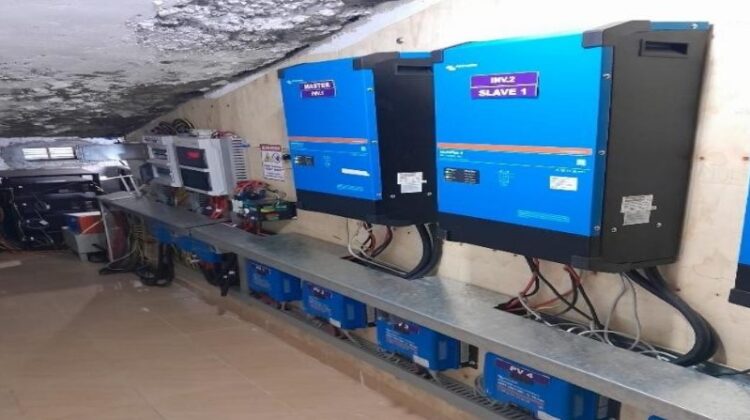
The Interventions: In collaboration with Dutch and Belgian partners, ATN-K has integrated off-grid solar infrastructure into local clinics and special education schools. They have further provisioned digital computer laboratories and internet infrastructure to multiple regional schools, including Ringa Girls High School and Nyabondo Girls Boarding Primary.
-
The Research Integration: These digitized environments act as testing grounds for JOOUST’s research into technology-enhanced learning, ensuring that modern educational software is designed to function fluidly in resource-constrained classrooms.
Systems Thinking: Why This Model Endures
The ultimate success of Aid the Needy Kenya lies in its commitment to “systems thinking.” Their organizational philosophy recognizes that a community health program cannot succeed in isolation if the population lacks clean water, and an agricultural project will stumble if the youth do not have the vocational skills required to navigate a changing market.
By pairing their profound grassroots mobilization capabilities with JOOUST’s scientific rigor, national policy channels, and international alliances, ATN-K is establishing a reproducible blueprint for how modern community development ought to be managed. They are ensuring that science serves the people, and the people inform the science.
Reach the Executive Secretariat
To discuss partnership opportunities, institutional fundraising, or research collaborations, you can contact the ATN-K leadership directly at their Oyugis headquarters.