Digital Learning & ICT for Schools
Project Overview
Digital Learning & ICT for Schools Project
Bridging the Digital Divide and Empowering the Next Generation Through Technology
The Digital Learning & ICT for Schools Project is one of Aid the Needy Kenya’s (ATN-K) flagship education initiatives aimed at improving access to quality, inclusive, and technology-driven education for learners in underserved communities across Kenya’s Lake Victoria Basin.
In today’s digital world, access to Information and Communication Technology (ICT) has become essential for quality education, innovation, and economic development. However, many rural schools continue to face significant barriers, including limited ICT infrastructure, inadequate internet connectivity, lack of digital learning resources, and insufficient teacher training. These challenges prevent learners from acquiring the digital competencies needed to thrive in the 21st-century economy.
To address these challenges, ATN-K collaborates with schools, Technical and Vocational Education and Training (TVET) institutions, county governments, development partners, and the private sector to strengthen digital education by providing ICT equipment, improving internet access, promoting digital literacy, and enhancing teachers’ capacity to integrate technology into teaching and learning.
Through this project, ATN-K is helping bridge the digital divide, improve educational outcomes, and prepare learners with the knowledge and skills required for higher education, employment, entrepreneurship, and innovation.
The Challenge
Many schools in rural Kenya continue to face challenges that limit effective digital learning.
These include:
- Limited access to computers and ICT equipment
- Poor or unreliable internet connectivity
- Inadequate electricity supply
- Lack of digital learning resources
- Limited ICT skills among teachers
- High cost of digital technologies
- Low student-to-computer ratios
- Limited opportunities for STEM education
- Digital inequality between rural and urban schools
Without access to digital learning tools, students are disadvantaged in an increasingly technology-driven world.
Project Goal
The primary goal of the Digital Learning & ICT for Schools Project is:
To improve access to quality, technology-enabled education by strengthening ICT infrastructure, promoting digital literacy, and creating inclusive learning environments that prepare learners for the digital economy.
Project Objectives
The project aims to:
- Improve ICT infrastructure in schools.
- Increase access to computers and digital learning resources.
- Expand internet connectivity in educational institutions.
- Enhance teachers’ digital competencies.
- Promote STEM and digital innovation.
- Strengthen digital inclusion for vulnerable learners.
- Improve educational outcomes through technology.
- Prepare learners for future employment and entrepreneurship.
Project Components
1. ICT Infrastructure Development
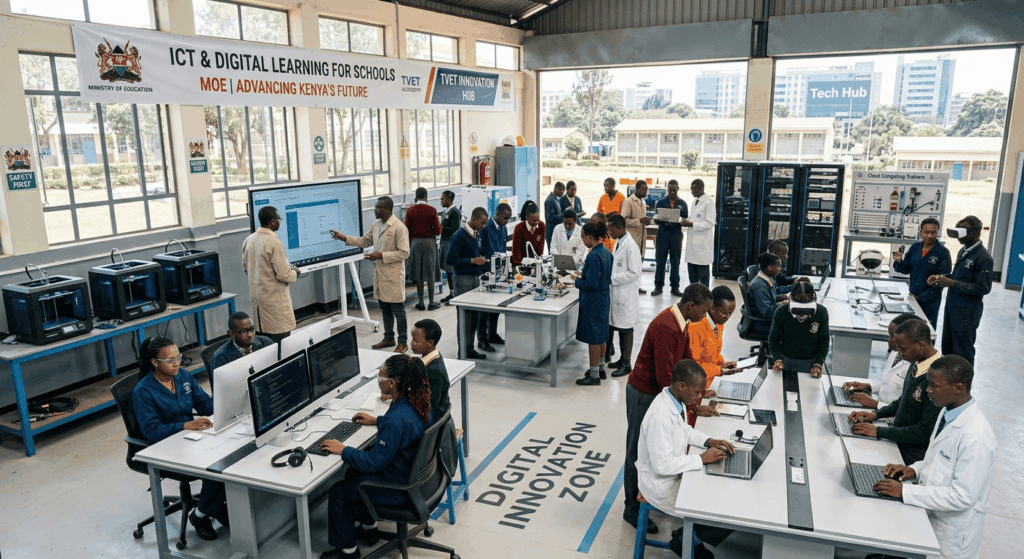
ATN-K supports schools by improving their ICT infrastructure through the provision of modern technology resources.
Support includes:
- Computer laboratories
- Desktop and laptop computers
- Projectors and smart displays
- Printers and networking equipment
- Educational software
- School management ICT systems
These resources create modern learning environments that enhance both teaching and learning.
ATN-K’s organizational profile highlights support for ICT equipment and internet connectivity for schools and TVET institutions as part of its education initiatives.
2. Internet Connectivity
Reliable internet access opens new opportunities for learners and educators.
The project helps schools establish:
- Broadband internet connections
- Wireless (Wi-Fi) networks
- Secure digital learning environments
- Access to online educational resources
- Virtual collaboration platforms
Internet connectivity enables schools to access global knowledge and participate in digital learning opportunities.
3. Digital Learning Resources
ATN-K promotes the use of digital content that enhances classroom instruction and independent learning.
Resources include:
- E-learning platforms
- Interactive educational content
- Digital textbooks
- Educational videos
- Online assessments
- Virtual science and mathematics resources
- Digital libraries
These tools support more engaging, interactive, and learner-centered education.
4. Teacher Capacity Building
Technology is most effective when educators have the skills to use it confidently.
ATN-K provides professional development for teachers in:
- Digital teaching methods
- Educational technology integration
- Online classroom management
- ICT troubleshooting
- Digital assessment tools
- Cyber safety and responsible technology use
Teacher training ensures that technology becomes an effective part of everyday learning.
5. Student Digital Literacy
The project equips learners with practical digital skills that prepare them for higher education and employment.
Students receive training in:
- Computer literacy
- Internet research
- Microsoft Office applications
- Coding and programming basics
- Digital communication
- Online collaboration
- Cybersecurity awareness
- Responsible digital citizenship
These competencies build confidence and improve future career opportunities.
6. STEM and Innovation
ATN-K encourages innovation by promoting Science, Technology, Engineering, and Mathematics (STEM) education.
Schools are supported to:
- Establish STEM clubs
- Participate in innovation competitions
- Explore robotics and coding
- Develop problem-solving skills
- Encourage scientific inquiry
- Promote creativity and critical thinking
These activities prepare learners to become future innovators and leaders.
Project Impact
The Digital Learning & ICT for Schools Project has significantly improved educational opportunities for participating schools.
Improved Learning Outcomes
Technology-enhanced learning has contributed to:
- Greater student engagement
- Better understanding of classroom concepts
- Improved academic performance
- Enhanced critical thinking skills
- Increased collaboration among learners
Digital tools make learning more interactive, accessible, and relevant.
Increased Digital Literacy
Students gain practical ICT skills that prepare them for:
- Higher education
- Modern workplaces
- Entrepreneurship
- Online learning
- Innovation and research
Digital literacy has become an essential life skill for every learner.
Empowered Teachers
Teachers benefit from:
- Improved ICT competencies
- Better lesson delivery
- Access to digital teaching resources
- Increased professional confidence
- Enhanced classroom management
Educators become more effective in delivering high-quality education.
Reduced Digital Inequality
The project helps narrow the technology gap between rural and urban schools by providing learners in underserved communities with access to modern educational technologies.
This promotes more equitable access to quality education.
Stronger Community Development
Improved education contributes to broader community development by:
- Increasing future employment opportunities
- Supporting innovation
- Strengthening local economies
- Promoting lifelong learning
- Building digitally skilled communities
Education serves as a catalyst for sustainable social and economic development.
Community Participation
Community ownership is essential to the project’s success.
ATN-K works closely with:
- School Boards of Management
- Parents’ Associations
- Teachers
- Students
- Community leaders
- County Governments
- TVET institutions
- Development partners
Communities participate in identifying priorities, maintaining ICT infrastructure, and supporting digital learning initiatives.
Sustainability Measures
To ensure long-term success, ATN-K promotes:
- Continuous teacher professional development
- ICT maintenance and support plans
- School ICT committees
- Responsible technology use policies
- Community ownership of ICT facilities
- Partnerships with technology providers
- Digital skills mentorship programs
These strategies ensure schools continue benefiting from technology well into the future.
Strategic Partnerships
The Digital Learning & ICT for Schools Project is implemented through collaboration with:
- Ministry of Education
- County Governments
- Technical and Vocational Education and Training (TVET) institutions
- Development partners
- Technology companies
- Internet service providers
- Educational institutions
- Community organizations
These partnerships strengthen technical expertise, improve resource mobilization, and expand access to digital education.
Alignment with the Sustainable Development Goals (SDGs)
This project contributes directly to several United Nations Sustainable Development Goals, including:
- SDG 4: Quality Education
- SDG 5: Gender Equality
- SDG 8: Decent Work and Economic Growth
- SDG 9: Industry, Innovation and Infrastructure
- SDG 10: Reduced Inequalities
- SDG 17: Partnerships for the Goals
By promoting digital inclusion and strengthening education systems, the project supports sustainable and inclusive development.
Looking Ahead
ATN-K is committed to expanding the Digital Learning & ICT for Schools Project by:
- Establishing additional computer laboratories in underserved schools.
- Expanding broadband internet connectivity.
- Providing more digital devices for learners and teachers.
- Introducing coding, robotics, and Artificial Intelligence (AI) education.
- Strengthening cybersecurity awareness in schools.
- Supporting digital innovation hubs for young people.
- Expanding ICT training for teachers and school administrators.
- Building partnerships with technology companies to enhance digital learning.
These future initiatives will prepare more learners with the skills needed to succeed in an increasingly digital world.
Conclusion
The Digital Learning & ICT for Schools Project reflects ATN-K’s commitment to ensuring that every learner has access to quality, technology-enabled education regardless of where they live. By improving ICT infrastructure, expanding internet connectivity, strengthening teacher capacity, and promoting digital literacy, the project is preparing young people for success in higher education, employment, entrepreneurship, and the digital economy.
At Aid the Needy Kenya (ATN-K), we believe that digital education is a powerful driver of social and economic transformation. Through innovation, strategic partnerships, and community engagement, we are bridging the digital divide and empowering the next generation with the knowledge, skills, and confidence to shape a brighter and more sustainable future.
Projects Testimonials

Before the Atela Community Water Project, I walked for nearly two hours every day to fetch water for my family. The water we collected was often unsafe, and our children frequently fell sick. Today, clean water is available much closer to our home, giving us more time for farming and caring for our families. This project has truly changed our lives, and we are deeply grateful to Aid the Needy Kenya for bringing hope to our community.
Mary Achieng'
Resident, Atela Village, Kabondo Kasipul, Homa Bay County
Reliable access to clean water has transformed not only our health but also our livelihoods. We no longer worry about where to find safe water during the dry season, and we can spend more time working on our farms instead of walking long distances. The Atela Water Project has restored dignity and created new opportunities for our community.
John Ouma
Farmer, Kabondo Kasipul, Homa Bay County
As a mother, seeing my children drink clean, safe water every day gives me peace of mind. They are healthier, attend school more regularly, and I now have time to participate in community development activities. The Atela Community Water Project has brought lasting change to our village. We appreciate Aid the Needy Kenya and its partners for investing in our future.
Grace Atieno
Parent and Community Volunteer, Homa Bay County